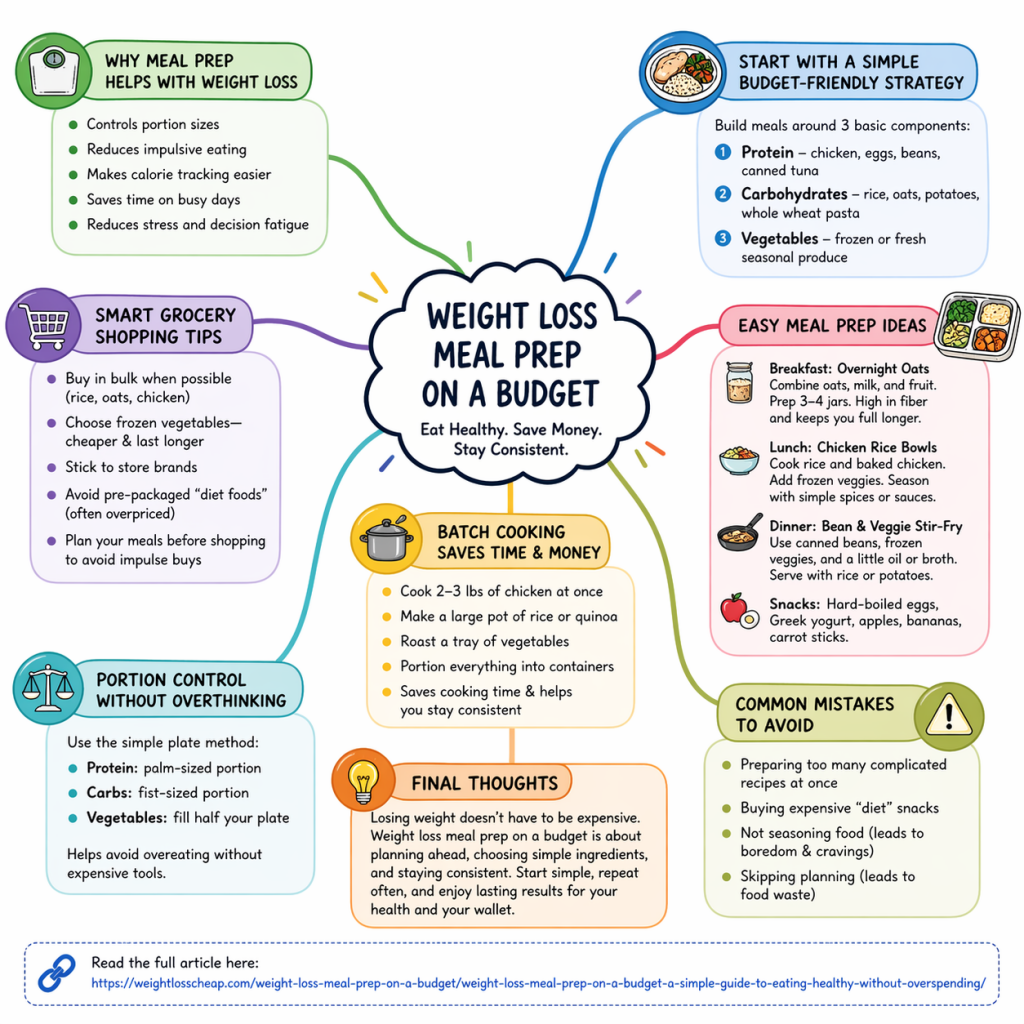
Meal prepping remains one of the smartest ways to lose weight without overspending. In 2026, rising grocery prices have pushed many people to look for practical, affordable meal ideas that are healthy, filling, and easy to prepare. The good news is that weight loss meal prep does not require expensive “diet foods” or complicated recipes. With simple ingredients, portion control, and smart planning, you can create nutritious meals for the entire week while saving both time and money.
Below are 10 budget-friendly meal prep ideas that support weight loss and help reduce food waste.
1. Overnight Oats Jars
Overnight oats are inexpensive, high in fiber, and extremely versatile. Combine rolled oats with low-fat milk or almond milk, then add chia seeds and frozen berries. Prepare several jars at once for quick breakfasts throughout the week.
Benefits:
- Keeps you full longer
- Costs less than packaged breakfast bars
- Easy to customize

2. Chicken, Rice, and Vegetables
This classic meal prep combination remains popular because it works. Use bulk chicken breast or chicken thighs, brown rice, and frozen vegetables to keep costs low. Season meals differently each day to avoid boredom.
Budget tip:
Buy frozen vegetables instead of fresh to reduce waste and save money.
3. Egg Muffin Cups
Egg muffin cups are ideal for breakfast or snacks. Mix eggs with spinach, onions, and diced peppers, then bake in muffin tins. They are high in protein and easy to store in the refrigerator.
Why they help with weight loss:
- Protein helps reduce cravings
- Portion sizes are controlled
- Low in calories
4. Turkey and Bean Chili
Beans are one of the cheapest and healthiest ingredients available. Combine lean ground turkey with black beans, tomatoes, onions, and chili spices for a filling meal prep option.
Advantages:
- High fiber content
- Excellent for batch cooking
- Freezes well
5. Tuna Salad Lettuce Wraps
Canned tuna is affordable and packed with protein. Mix tuna with Greek yogurt instead of mayonnaise and wrap it in lettuce leaves for a low-carb lunch option.
Extra savings tip:
Purchase tuna in bulk packs when on sale.
6. Stir-Fry with Frozen Vegetables
A simple stir-fry can be prepared in under 30 minutes. Use frozen mixed vegetables, tofu or chicken, and brown rice or noodles. Homemade sauces are usually cheaper and healthier than takeout.
Popular low-cost ingredients:
- Broccoli
- Carrots
- Bell peppers
- Cabbage
7. Lentil Soup
Lentils are one of the best budget foods for weight loss. They are rich in protein and fiber while costing far less than meat. A large pot of lentil soup can provide several meals for only a few dollars.

8. Greek Yogurt Snack Boxes
Prepare snack boxes using Greek yogurt, sliced fruit, nuts, and boiled eggs. This prevents expensive impulse purchases during busy workdays.
Benefits:
- Balanced protein and healthy fats
- Easy grab-and-go option
- Helps avoid unhealthy vending machine snacks
9. Sweet Potato and Black Bean Bowls
Sweet potatoes are affordable, nutritious, and filling. Pair them with black beans, salsa, and a small amount of cheese or avocado for a flavorful meal prep bowl.
Why it works:
- High fiber keeps you satisfied
- Naturally rich in vitamins
- Vegetarian-friendly and inexpensive
10. DIY Protein Pasta Meals
Instead of ordering expensive restaurant pasta, prepare high-protein pasta dishes at home using chickpea pasta, lean meat, and tomato sauce. Portion meals into containers for lunch or dinner.
Money-saving idea:
Store-brand pasta and canned tomatoes often taste just as good as premium brands.
Just do it…
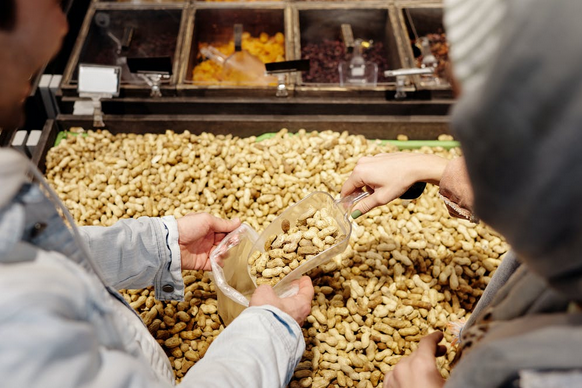
Successful weight loss meal prep in 2026 is not about perfection. It is about consistency, smart grocery shopping, and preparing meals ahead of time so healthier choices become easier. Focus on affordable staples such as oats, eggs, rice, beans, frozen vegetables, and lean proteins. Buying in bulk, cooking at home, and using reusable containers can dramatically reduce weekly food expenses while helping you stay on track with your health goals.
By starting with just a few meal prep recipes each week, you can build sustainable habits that support both your weight loss goals and your budget.